Training
Key Recovery Protocols and How to Implement Them
Recovery is when the gains are really made. Sleep, nutrition timing, active recovery versus rest, and knowing the signs you’re under-recovered – for golfers and endurance athletes alike.
- Golf
- Endurance
James Tugwell · Level 4 Personal Trainer, TPI Certified
4 min read
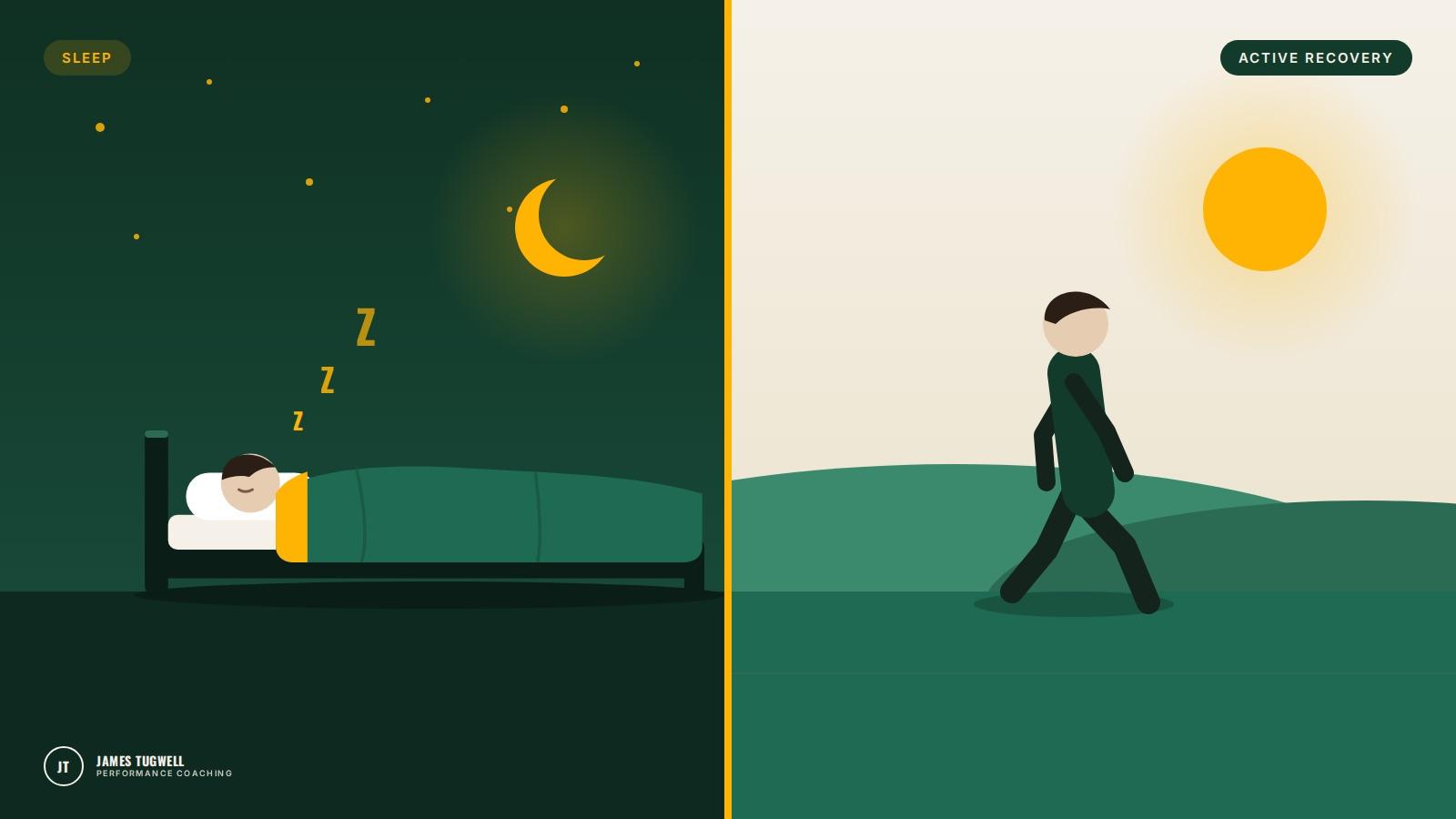
Recovery is essential. It’s when the ‘gains’ are really made and the body has the time to properly implement everything that you’ve been asking it to do. It also allows the body to have a rest and ensures that consistent training can be adhered to over months and years rather than weeks.
Four things worth getting right
Sleep
Nutrition Timing
Active Recovery
Know The Signs
Sleep. The single biggest lever. If you’re regularly under seven hours, that’s very likely doing more damage to your progress than any single missed session ever could. A few practical basics worth mentioning: a consistent wake time matters as much as a consistent bedtime, screens in the hour before bed measurably reduce sleep quality for most people even if they don’t feel like they do, and a cool, dark room matters more than most people give it credit for. This isn’t always straightforward with young families or shift-based commitments – and that’s fine; the goal isn’t perfect sleep every night, it’s protecting it where you genuinely can. For a one-off bad night, train as planned but ease back intensity slightly. For a longer stretch of poor sleep – a newborn, a demanding work period – it’s worth deliberately reducing training load rather than pushing through and risking illness or injury on top of the fatigue already in the system.
Nutrition timing. Nothing complicated needed here – a source of protein and carbohydrate as soon as possible (ideally within 30 minutes) of a session supports recovery meaningfully, with a snack beforehand also likely to improve the session’s performance. Beyond post-session timing, staying reasonably consistent with overall eating (i.e., not over or under-eating) supports recovery more than any specific supplement or timing trick.
It’s also worth remembering that recovery isn’t only about physical training load – life stress and training stress draw from the same overall capacity. A genuinely demanding work period, a stretch of poor sleep with a new baby, or a stressful few weeks at work all reduce your capacity to absorb hard training, even if the training itself hasn’t changed. Recognising that and adjusting training load accordingly, rather than treating physical and life stress as entirely separate, is one of the more advanced but genuinely useful recovery skills to build.
Active recovery versus complete rest. Easy movement – a walk, light mobility work – generally supports recovery better than doing nothing at all, but there’s also a place for genuinely complete rest days, particularly after your hardest sessions or in a heavier training week. How much you lean on each depends partly on training history too – someone with years of consistent training behind them typically recovers faster and can handle more active recovery than someone newer to structured training, who often benefits from more complete rest early on.
Knowing when you’re under-recovered. A resting heart rate that’s noticeably elevated for several mornings in a row, sessions that felt manageable last week suddenly feeling much harder, persistent fatigue that doesn’t lift after a good night’s sleep, or snapping at your kids or your team more than usual are all worth treating as data, not just noise.
Recovery needs also shift with age and training history – a session that required minimal recovery in your twenties may need noticeably more deliberate attention a decade or two later, not because you’re doing anything wrong, but because recovery capacity genuinely changes over time. Adjusting expectations accordingly, rather than comparing current recovery to a much younger version of yourself, avoids a common source of frustration.
Golf vs endurance. For golfers, recovery matters most between heavy range sessions or high-rep practice blocks, where repetitive loading through the same movement pattern accumulates fatigue that isn’t always obvious until it shows up as a niggle. For endurance athletes, recovery is what makes a base-building block work at all – easy days need to actually be easy for the hard days to do their job, and that discipline is harder than it sounds.
What recovery looks like for each
Golf
Recover Between Heavy Sessions
Recovery matters most between heavy range sessions and high-rep practice blocks – repetitive loading builds fatigue that often only shows up as a niggle.
Endurance
Easy Days, Done Properly
Recovery is what makes a base-building block work – easy days need to actually be easy.
None of this is about training less overall. It’s about training consistently over months and years rather than in short, intense bursts that collapse the moment life gets in the way – and consistency, more than any single session, is what actually drives long-term progress in either sport.
If you’d like help building recovery into your training around work and family, get in touch and we’ll build it together. Or book a free 15-minute consult and we can talk it through.