Training
Why October Is a Great Time to Start Training
Every January, gyms fill up with people “starting properly”, and most have quietly stopped before March. There’s a much better time to start training more seriously – and it’s right now.
- Golf
- Endurance
James Tugwell · Level 4 Personal Trainer, TPI Certified
4 min read

Every January, gyms fill up with people “starting properly.” Most have quietly stopped well before March. There’s a much better time to start training more seriously, and it isn’t January – it’s right now.
The three-phase structure
Structured training, in golf or endurance sport, tends to move through three broad phases. A base/strength phase first: building the engine, mostly lower-intensity aerobic volume for endurance athletes and dedicated strength work for both groups. A power/speed phase next: converting that base into sport-specific speed and power. And a competition/peak phase last: sharpening up and performing when it actually counts.
Three phases. One season.
Base / Strength
Build the engine
Power / Speed
Convert it to performance
Competition
Peak when it counts
This all allows for specificity. We want to make sure we are ready to move through each stage and target different focus points at the right time, with the end goal being that we perform when we most want to.
Why October fits both audiences
October sits in an unusually useful spot. Most amateur golfers are winding their outdoor playing season down, which makes right now the natural start of an off-season strength phase. Most endurance athletes with spring goals are either starting base-building already or should be. That makes October, for both groups, an excellent starting point for the base/strength phase.
Why this beats waiting for January
Start now and you get a full strength/base phase before shifting into power and speed work in the new year. Start in January instead, and you’re working backwards from the same competition or event dates with less runway – which usually means not being able to cover the required base building phase so you’re actually ready for a different power-based impetus or you’re compressing the base phase to something shorter than it should be and trying to jump to the next phase before you’re ready (significant injury potential). Starting in October isn’t about training more; it’s about giving the process the time it actually needs and putting you in the best place for next season rather than the following year. Add in the fact that January is the coldest and darkest time in a year and it’s no wonder people drop out or succumb to injury.
A worked example – if your season or first key event sits around April or May, an October start gives you roughly 10–12 weeks of base/strength work through to the new year, 8–10 weeks of power/speed work from January into March, and a shorter sharpening block heading into the season itself. Start in January instead and that base phase gets squeezed to 6–8 weeks at most – much tighter, more injury risk and with far less room for the inevitable disrupted week or two along the way.
The runway you give yourself
Same event date in spring – very different amount of preparation, depending on when you start.
Start in October
~10–12 weeks of base
Oct–Dec: Base / Strength; Jan–Mar: Power / Speed; Apr: Competition
Start in January
~6–8 weeks of base
Oct–Dec: Not training yet; Jan–Feb: Base / Strength; Mar: Power / Speed; Apr: Competition
The practical argument, separate from the physiology
Building the habit and the routine now, while the weather is still reasonable and the evenings aren’t fully dark yet, is considerably easier than trying to start a new training habit in the middle of a cold, dark January. By the time the worst of the weather arrives, the routine is already established rather than something you’re still trying to build from scratch. Build that base and routine now and you’ll be surprised how much easier those first few months of the year will be.
Sport-specific application
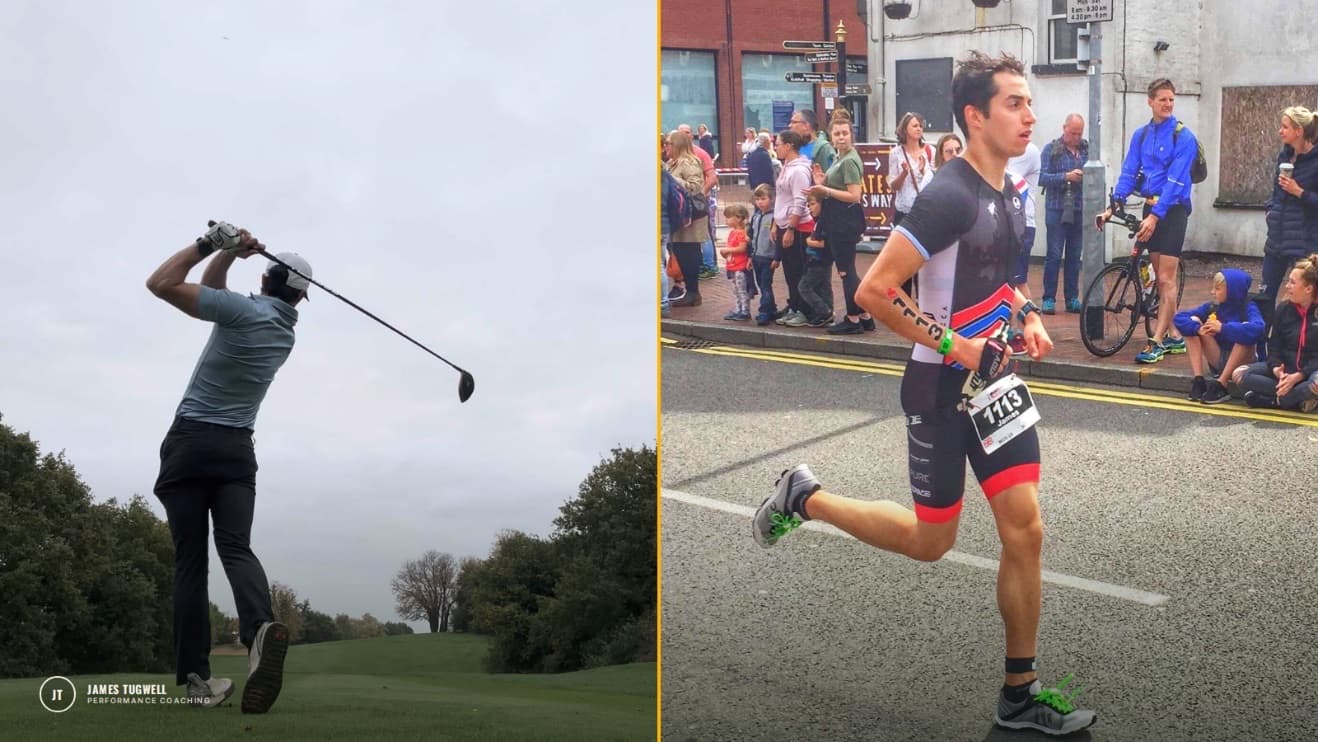
For golfers, an October start means 2–3 strength sessions a week focused on building that strength base, with mobility work targeting the range of motion the swing depends on and addressing any physical imbalances – all while range and course commitments are naturally lighter than they’ll be come spring. This is also the point in the year swing changes, if you’re making any, tend to bed in most easily – less pressure from upcoming competitive rounds, and a stronger physical base underneath the change. Booking gym time or setting up a simple home set-up now, before the pre-Christmas period gets busy, removes one more barrier to actually starting.
For endurance athletes, it means the bulk of weekly volume staying easy and aerobic, layered with 2–3 strength sessions to build a base that’s genuinely durable, not just high-mileage – setting up a build/development phase in the new year that starts from a stronger foundation than it otherwise would. This is also where the unglamorous stuff – easy aerobic volume, consistent sleep, basic strength work – does more for you than any single hard session could. It’s what the rest of the year gets built on. For many, this is also the ideal time to get a proper look at current fitness markers – a recent 5K time or FTP test – to track progress against through the winter.
I’ll go deeper into both of these specifically – the golf off-season plan and the endurance base-building structure – in upcoming posts. For now: if you’ve been waiting for January to “start properly,” this is your sign to get started now instead.